
Seasonal Home Water Damage Florida: Fort Myers Guide to Snowbird Home Water Damage
Seasonal home water damage in Fort Myers is usually found weeks after it started. How to protect an empty home, what to do when you come back to a leak, and what your policy will not pay.
100+ ReviewS
24/7 Phone Line
IICRC S500 & S520 Methods
Licensed Mold Remediators
Why seasonal homes in Fort Myers get the worst water damage
Seasonal home water damage in Florida is almost always a small leak that nobody saw. In an occupied house a dripping supply line gets noticed in an hour. In a closed-up house it can run from May to October, and by the time a neighbor smells it the job is mold remediation, not drying.
We dry a lot of empty homes in Lee County. About 29% of the county’s residents are 65 or older (U.S. Census Bureau), and many of them spend the summer up north. Their homes sit closed for four to six months with the AC set high or off, which is exactly the setup that turns a $60 supply line into a five-figure claim. This page is for snowbirds, second-home owners and the people who watch their houses. If you are standing in a wet house right now, skip to what to do right now or call (239) 837-2323.
Signs of snowbird home water damage when you first walk in
With snowbird home water damage, the smell usually tells you first. Then the baseboards, the AC closet floor and the ceilings near the air handler.
- A musty, closed-in smell that does not clear when you open the doors. In our experience that is mold, not stale air.
- Baseboards that have swelled or pulled away from the wall, especially in bathrooms, the laundry room and along the kitchen toe kicks.
- A brown ring or soft spot on the ceiling under the attic air handler, or a wet floor in the AC closet.
- Warped plank flooring, grout that has darkened in one area, or a rug that feels damp underneath.
- Condensation inside the windows in the morning. That means humidity has been above 60% for a while, and mold grows in that air even without a leak (EPA).
Why an empty Fort Myers home leaks and molds so fast
Three things line up in a seasonal home: nobody is there to notice water, the AC is running less or not at all, and summer is the wettest, most humid time of year.
Fort Myers averaged 72% relative humidity in 2024, and summer 2024 was the wettest on record here, with 43.87 inches of rain from June through August (National Weather Service, WINK News). An occupied house fights that with the AC running all day. A closed house set to 82°F, or turned off to save money, does not. The EPA says wet materials should dry within 24 to 48 hours to prevent most mold growth. In a closed home that window passes with nobody there to see it.
The leaks are the same ones we see everywhere in Lee County, just left to run longer: a clogged condensate line that overflows the drain pan every day the AC runs (our number one call from returning owners, see AC leak water damage), a braided supply line that fails after 10 to 15 years, or a water heater that rusts through in a garage closet (see burst pipe and water heater leaks). A house watcher who walks through every two weeks catches most of them while they are still drying jobs.
You came back to water. What to do right now
Shut the main valve, get the AC running if it is safe, photograph everything before you touch it, and call before you start throwing things out.
- Shut off the main water valve. In most Lee County homes it is outside where the line enters the house, or in a ground box by the meter. If the water heater is the source, turn off its power or gas too.
- Stay out of standing water near outlets or the panel. Cut power to wet rooms only if you can do it from a dry spot.
- Photograph every room, every wet wall and the failed part before anything moves. Keep the split supply line or the rusted fitting. The adjuster will ask what failed.
- Get the AC running if the air handler is not the leak. A closed house in Fort Myers heat grows mold faster. If the AC is the leak, leave it off until the drain is cleared.
- Write down the date you found the water and the last date anyone was inside. Your insurer will ask both.
- Call (239) 837-2323. A technician can measure moisture in the walls and floors the same day, and we can meet your house watcher if you are not here.
Do not tear out drywall yet. Insurers pay on documentation, and a wall cut out before anyone photographed it is hard to claim. The first-hour steps on our home page cover this in more detail.
How we handle a seasonal home job when the owner is out of state
Everything you would normally do in person, we do by phone, email and photo: authorization, the written scope, daily moisture logs and the final report.
- Access. You tell us who has a key. We meet your house watcher, a neighbor or a property manager on site, or work from a lockbox code.
- Inspection and moisture mapping. The technician finds the source, maps every wet wall and floor with pin meters and a thermal camera, and sends you the photos the same day.
- Written scope by email. Nothing gets cut until you approve an itemized scope. You can forward it straight to your adjuster.
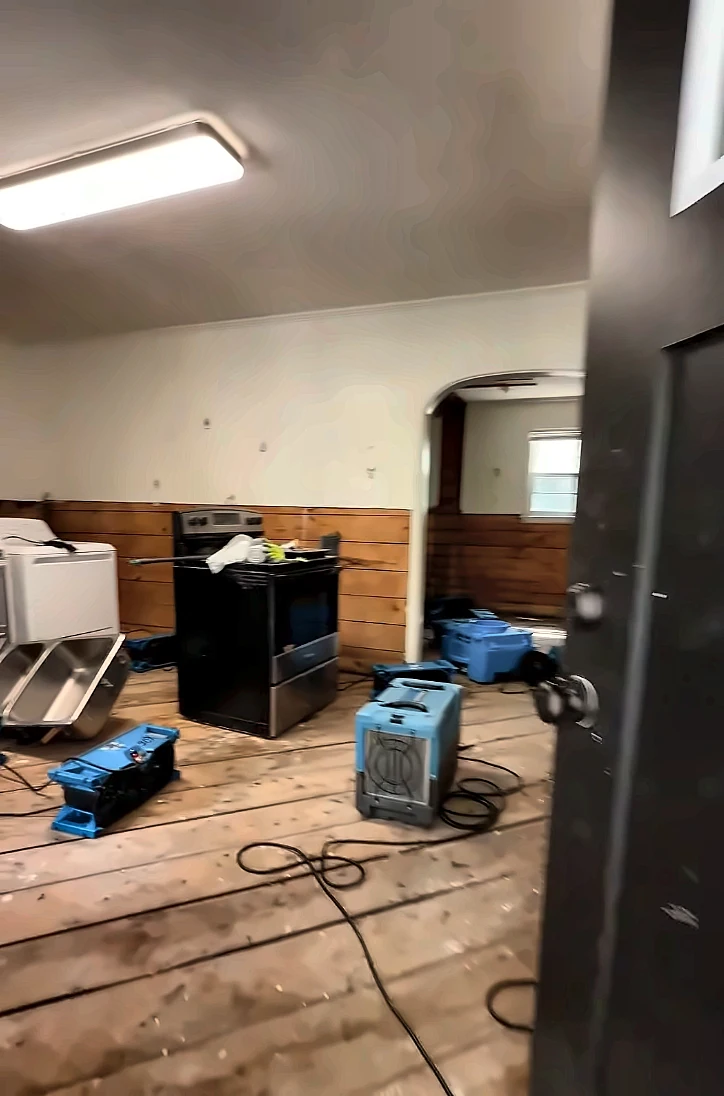
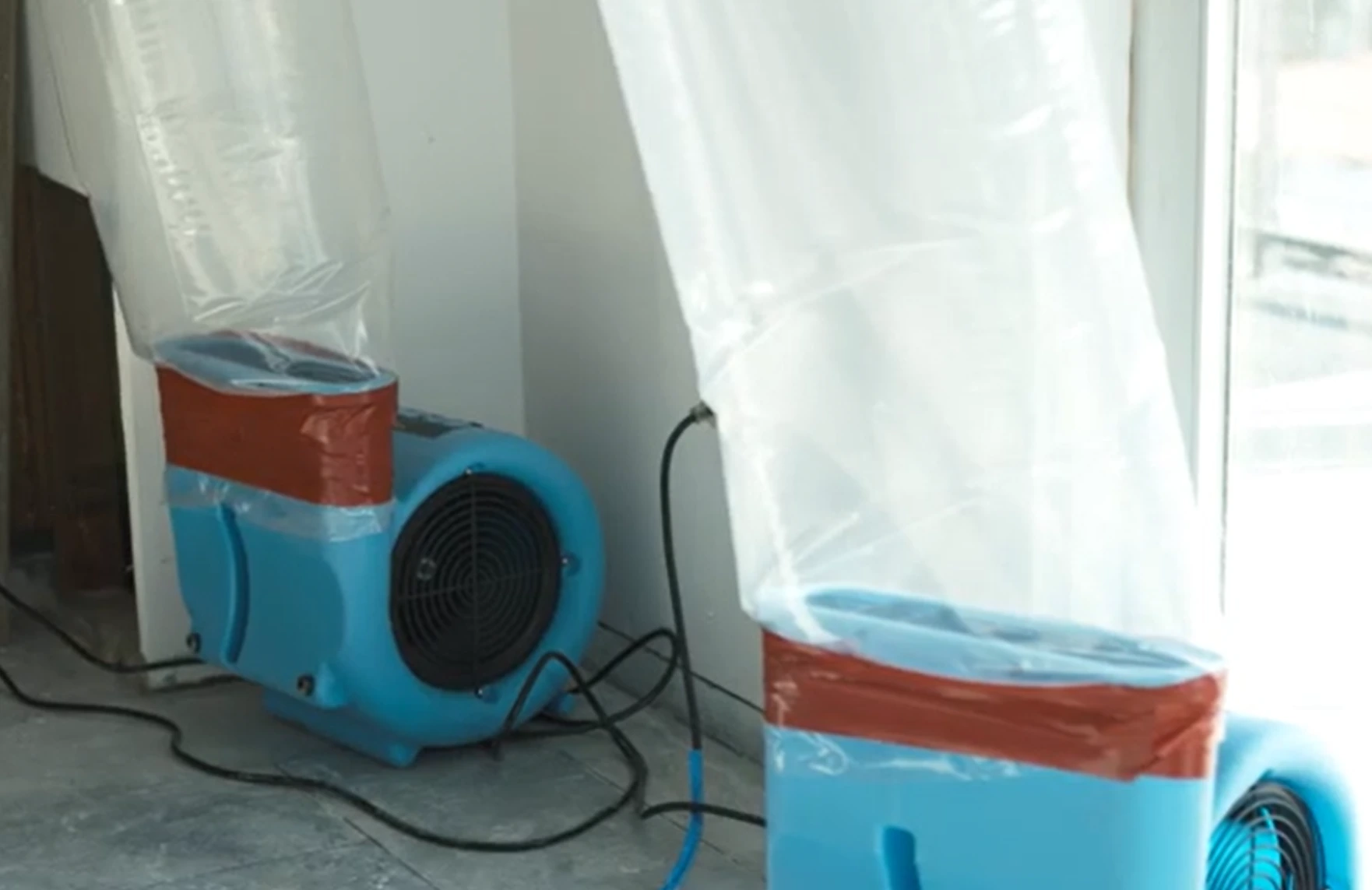
- Extraction and drying. Standing water comes out on the first visit. Air movers and LGR dehumidifiers run three to five days in a typical home, longer for hardwood and concrete.
- Daily readings, sent to you. Equipment leaves when the moisture logs hit the dry standard, not on a set day.
- Mold check. Seasonal homes are where we find growth behind drywall. Anything over 10 square feet goes to a Florida DBPR-licensed remediator, as the law requires. See mold remediation in Fort Myers.
Nobody asks you to sign over your insurance benefits. Florida voided that practice on policies issued since January 1, 2023.
Insurance on a vacant home: what your policy will and will not pay
Sudden leaks are usually covered. A leak that ran for two weeks or more often is not, and that is the rule that hits seasonal owners hardest.
Most Florida homeowners policies cover water damage that is sudden and accidental. Many of the same policies exclude damage from water that leaked “over a period of 14 or more days”. In an occupied home that rarely matters. In a home that sat closed from May to October it can void the whole claim, because the insurer only has to show the leak was old.
- Vacancy clauses. Some policies cut coverage when a home is empty more than 30 or 60 days unless you told the insurer. Ask your agent whether yours has one.
- Mold sublimits. Mold from a covered leak is often paid only up to a cap, commonly $10,000. Three months of growth can pass that quickly.
- Deadlines. Florida gives you one year from the date of loss to report a new claim (F.S. 627.70132). The date of loss on a seasonal home is often argued over, so the photos and the date you found the water matter.
Our Florida water damage insurance claims guide covers deadlines, documentation and what to do if the claim is denied.
What seasonal home water damage Florida owners face usually costs
The same leak costs two to four times more when it is found in October than when it is found the day it started, because the drying job has become a mold job.
Nationally, water damage restoration averages $3,868, with most jobs between $1,383 and $6,369, and mold remediation adds an average of $2,368 (Angi, 2026). A supply line caught the same day sits at the low end. One that ran for eight weeks means drywall, cabinets and flooring out, containment, HEPA cleaning and a separate clearance test. You get a written, itemized scope after the inspection and before any tear-out.
How to protect your Fort Myers home before you leave for the summer
The best defense against seasonal home water damage in Florida is simple: shut the main valve, keep the AC running with a humidity target, clear the drain line and have someone walk through every two weeks. Those four steps prevent most of what we see.
- Shut off the main valve and open a faucet to drop the pressure. If water must stay on for a house watcher, close the valves at the toilets, washer and water heater.
- Keep the AC on at about 78°F to 80°F with a humidistat or smart thermostat that holds indoor humidity under 60%. Turning it off saves a little money and risks the whole house.
- Have the condensate drain line cleared and the drain pan checked before you go. Add a float switch so the air handler shuts off instead of overflowing.
- Replace any braided supply line older than about eight years, and put a leak alarm under the water heater.
- Hire a home watch service or ask a neighbor to walk through every two weeks: open the cabinets under sinks, look at the ceilings near the AC closet, smell the air, and text you a photo. That log also helps your insurer.
- Leave a key and our number with whoever watches the house.
Key facts: seasonal home water damage Florida
The numbers behind this page, with their sources.
- About 29% of Lee County residents are 65 or older, and many live here only part of the year (U.S. Census Bureau).
- Fort Myers averaged 72% relative humidity in 2024, and summer 2024 was the wettest on record, with 43.87 inches from June through August (National Weather Service, WINK News).
- Wet materials should be dried within 24 to 48 hours, and indoor humidity should stay below 60% (EPA).
- Many Florida policies exclude leaks that ran 14 or more days. Check for vacancy clauses and mold sublimits before you leave.
- A new water damage claim must be reported within 1 year of the loss (F.S. 627.70132).
- Mold over 10 square feet must be handled by a Florida DBPR-licensed mold remediator (F.S. 468.8411).
- Help: 24/7 water removal, drying and licensed mold work in Fort Myers and Lee County. Phone (239) 837-2323.
Last updated September 29, 2026. Reviewed by the Fort Myers Restoration Co. team against the sources named on this page.
Seasonal home water damage Fort Myers questions
Straight answers for snowbirds and second-home owners in Lee County.
Call (239) 837-2323, day or night.
Water where it shouldn’t be? Let’s get it dry.
Coming back to seasonal home water damage in Florida is a bad day. One call gets a technician there, with photos and a plan sent to you wherever you are.
Call (239) 837-2323 any time. Our line is answered 24/7. See the contact page for email and office details.