
Florida Water Damage Insurance Claim Guide: Does Homeowners Insurance Cover Water Damage in Florida?
How a Florida water damage insurance claim works: deadlines, what is covered, why claims get denied, what to document and what to do if you disagree with your insurer. Plain English, with the statute behind every rule.
100+ ReviewS
24/7 Phone Line
IICRC S500 & S520 Methods
Licensed Mold Remediators
Does homeowners insurance cover water damage in Florida?
The short answer to “does homeowners insurance cover water damage in Florida” is usually yes, when the water came from a sudden and accidental event inside the home, like a burst supply line or an overflowing AC pan. Flooding from outside, slow leaks and wear and tear usually aren’t covered by a standard homeowners policy.
On any claim, your policy wording decides, so keep a copy of your declarations page and the full policy handy. This table shows how common Fort Myers situations are usually handled.
| What happened | Usually handled by | What to know |
|---|---|---|
| Burst supply line, failed water heater, split washer hose | Homeowners policy | The water damage is usually covered. The failed part often isn’t |
| AC drain pan overflow | Homeowners policy | Same as above. Keep the HVAC invoice showing what failed |
| Rain through a roof damaged by wind | Homeowners policy | During a hurricane, your hurricane deductible applies (see storm damage restoration) |
| Storm surge or rising river or canal water | Flood policy (NFIP or private) | A homeowners policy excludes flood |
| Sewer or drain backup | Often needs a water backup endorsement | Check whether yours has one |
| Leak that ran for weeks | Often excluded | Many policies exclude leaks that ran 14 days or more |
| Mold | Often limited | Many policies cap mold coverage. Check your limit |
On hurricane deductibles: Florida Statute 627.701 requires insurers to offer choices of $500 or 2, 5 or 10 percent of the dwelling limit, and the hurricane deductible applies once per calendar year to all hurricane losses.
Water damage claim deadlines in Florida for you and your insurer
You have 1 year from the date of loss to give notice of a new claim. Your insurer has 7 days to acknowledge you, and 60 days after notice to pay or deny.
| Deadline | Who | Rule | Source |
|---|---|---|---|
| Notice of a new or reopened claim | You | Within 1 year of the date of loss | F.S. 627.70132 |
| Notice of a supplemental claim | You | Within 18 months of the date of loss | F.S. 627.70132 |
| Acknowledge your claim communication | Insurer | Within 7 days | F.S. 627.70131 |
| Begin investigating after proof of loss | Insurer | Within 7 days | F.S. 627.70131 |
| Physical inspection, if needed | Insurer | Within 30 days after proof of loss | F.S. 627.70131 |
| Send you its adjuster’s detailed estimate | Insurer | Within 7 days after it is written | F.S. 627.70131 |
| Pay or deny the claim | Insurer | Within 60 days after notice | F.S. 627.70131 |
The 1-year limit is the outer edge, not a target. The longer you wait, the harder it is to prove when and how the damage happened.
How to file a water damage claim, step by step
To file a water damage claim in Florida: stop the water, document everything before cleanup, report the claim, start drying and keep every record. That order protects both your house and your claim.
- Stop the water and prevent more damage. Most policies expect you to take reasonable steps to protect the property, so emergency water removal and drying usually shouldn’t wait for the adjuster.
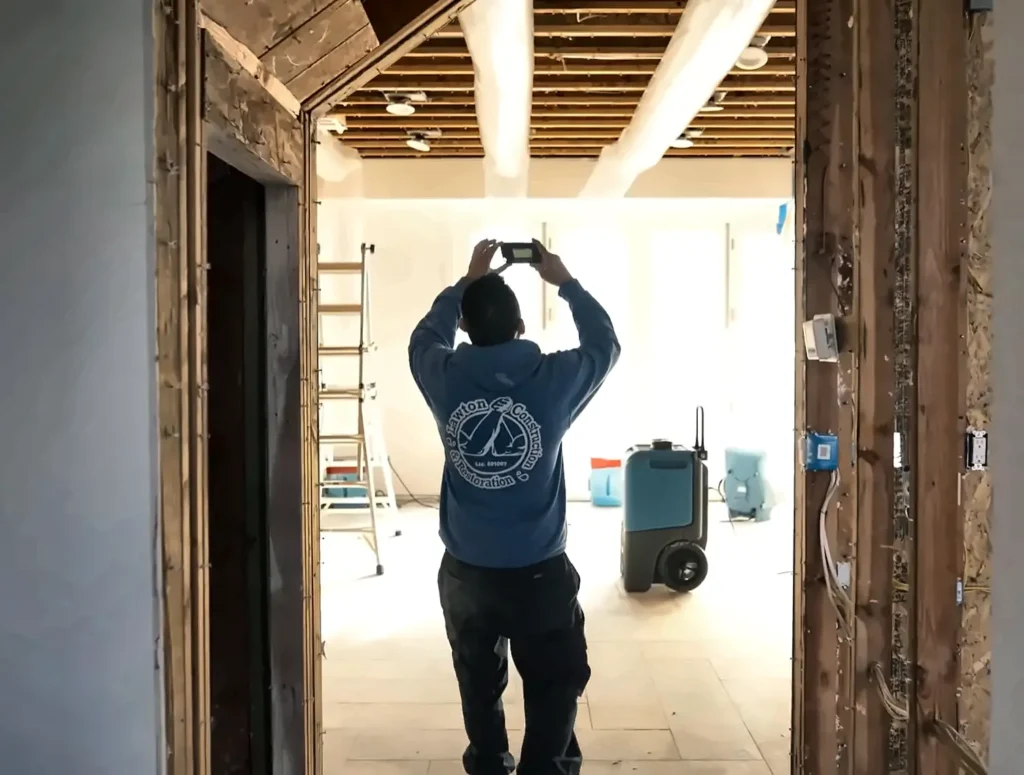
- Document before anything moves. Photos and video of every wet room, the source, and damaged belongings. Write down the date and time you found it. Keep the failed part, such as the burst hose or valve.
- Report the claim. Get a claim number and your adjuster’s name and contact information. Keep a log of every call.
- Start mitigation and keep receipts. Extraction and drying bills are usually part of the claim.
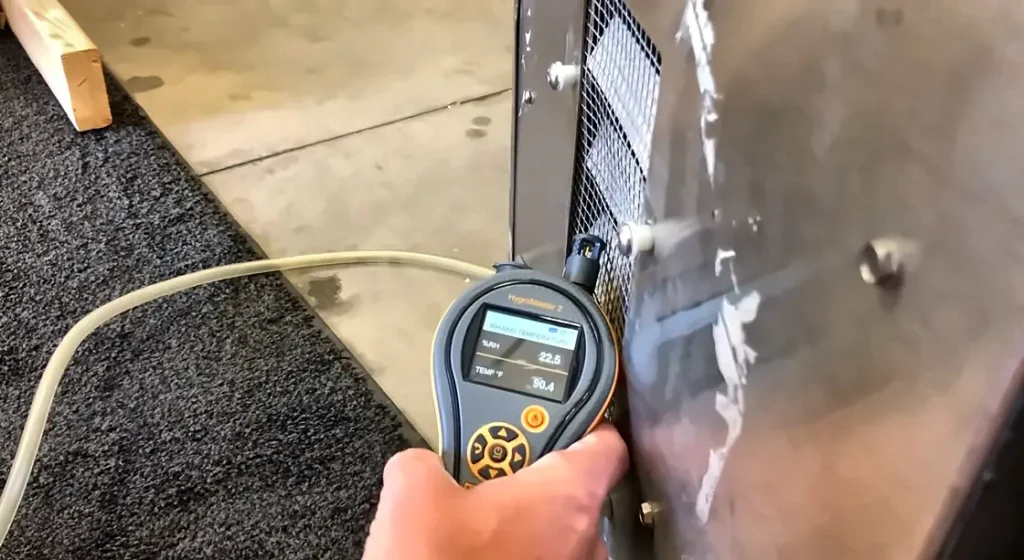
- Get moisture readings and a daily drying log. They show exactly what was wet and for how long. See what a real drying log includes.
- List damaged contents with photos, age and approximate value.
- Walk the adjuster through it. Share the photos, the moisture map and the drying log.
- Ask for the adjuster’s estimate if it hasn’t arrived within 7 days of being written.
- Compare it line by line with your contractor’s itemized estimate.
- Decide: accept, ask for a reinspection, or use one of the dispute options below.
Why a water damage claim gets denied in Florida
Most water damage claim denials come down to four things: the leak was too slow, the damage came from outside flooding, the cause was wear and tear, or the claim was reported too late.
- Long-term leakage. Many Florida policies exclude water that leaked constantly or repeatedly for 14 days or more. That exclusion comes from policy wording, not state law.
- Wear, tear and maintenance. A rusted-out water heater or a roof at the end of its life is often treated as maintenance, not a sudden loss.
- Flood. Rising water from outside is excluded from homeowners coverage.
- Late notice. Notice after the 1-year window bars the claim under F.S. 627.70132.
- More damage from waiting. If you didn’t take reasonable steps to stop the water, the insurer can dispute the extra damage.
- No backup endorsement. Sewer and drain backups often need their own coverage.
- Mold limits. The mold remediation part of a claim may be capped even when the water damage is covered.
A denial letter should state the policy language it relies on. Ask for it in writing if it doesn’t.
Flood damage vs water damage: which policy pays?
Water that comes down or out, from a pipe, an appliance or a storm-damaged roof, is usually a Florida water damage insurance claim under your homeowners policy. Water that comes up and in from outside, such as storm surge or a rising canal, is a flood claim.
- An NFIP flood policy covers up to $250,000 for the building and $100,000 for contents on a home (FloodSmart).
- New NFIP policies generally take effect 30 days after purchase, so you can’t buy coverage once a storm is on the way.
- Check your flood zone on the FEMA Flood Map Service Center and with Lee County Floodplain Management.
After a hurricane, many homes have both wind and flood damage. Photos that show where water entered, such as a ceiling stain under a damaged roof versus a water line on the walls, help each insurer see its share. See flood damage restoration in Fort Myers.
Can a contractor take over my claim?
Not on a policy issued on or after January 1, 2023. Under Florida Statute 627.7152, an assignment of post-loss benefits under those policies is void.
In practice, you stay in charge of your claim. A restoration company can document the loss and talk with your adjuster when you authorize it, but it can’t sign your benefits over to itself. Be careful with any contract that asks you to. Read F.S. 627.7152.
If you disagree with your insurer
When a claim comes back low or denied, start with a written request for a reinspection and an explanation. If that fails, Florida gives you free mediation, and most policies include an appraisal process.
State mediation program
Florida’s Department of Financial Services runs a mediation program for residential property claims. The insurer pays the mediator, and it must tell you about the program when you file. If you settle in mediation, you can cancel the settlement within 3 business days, unless you have already cashed or deposited the check (F.S. 627.7015).
Appraisal
Most policies have an appraisal clause for disputes over the amount of the loss. Each side picks an appraiser and the two choose an umpire. Read your policy for the exact rules and costs.
Public adjuster
A licensed public adjuster works for you, not the insurer. Florida caps their fee at 10 percent of payments for claims from a declared state of emergency, and 20 percent otherwise. They can’t take a fee on money the insurer paid or agreed to pay before you signed with them. You can cancel the contract within 10 days of signing, or longer after a declared emergency (F.S. 626.854).
Consumer help and attorneys
The Florida Department of Financial Services, Consumer Services takes insurance questions and complaints. For a large or complicated denial, talk to a Florida-licensed attorney.
Condo owners have extra rules
In a condo, the association’s master policy and your HO-6 policy each cover different parts of the unit, and Florida Statute 718.111 sets the split.
If water came from the unit above or below, three insurers can be involved. See condo water damage in Fort Myers for who pays what.
Your claim documents checklist
Keep everything for your water damage insurance claim in one folder, paper or digital. A complete file is the fastest way to a fair payment.
- Policy declarations page and full policy
- Claim number, adjuster name and a log of every call and email
- Date and time the damage was found
- Photos and video before cleanup, and the failed part
- Plumber or HVAC invoice showing the cause
- Moisture map, daily drying log and final dry readings
- Itemized mitigation and repair estimates
- Contents list with photos
- Receipts for emergency costs, including hotel stays if you had to leave
- The insurer’s estimate and any denial letter
This Florida water damage insurance claim guide is general information, not legal advice. Updated September 2026 from the Florida Statutes, FloodSmart and FEMA. Every source we use is listed on our Fort Myers water damage resources page, and more short answers are in the water damage FAQ. Need the water dried and documented today? Contact us or call (239) 837-2323.
Key facts about Florida water damage insurance claims
- Does homeowners insurance cover water damage Florida wide? Sudden and accidental damage usually yes. Flood, gradual leaks and seepage usually no.
- The claim deadline Florida sets is one year from the date of loss for a new claim and 18 months for a supplemental claim, under F.S. 627.70132.
- A water damage claim denied for late notice or a maintenance exclusion can still be appealed.
- Will my insurance go up? It can. Florida carriers may raise rates or non-renew, and a claim stays on your CLUE report up to seven years.
Last updated September 29, 2026. Reviewed by our Fort Myers crew lead.
Water damage insurance questions
Short, straight answers about Florida water damage insurance claims.
Call (239) 837-2323, day or night.
Water where it shouldn’t be? Let’s get it dry.
Good records for a Florida water damage insurance claim start with one call. Every hour counts in this humidity, so don’t wait for the smell.
Call (239) 837-2323 any time. Our line is answered 24/7. See the contact page for email and office details.