

Containment barrier in a damaged room, a common water damage FAQ topic in Fort Myers

Water Damage FAQ and Mold FAQ for Fort Myers Homeowners

Straight answers for Lee County homeowners on water damage, mold, insurance and repairs.

100+ ReviewS

24/7 Phone Line

IICRC S500 & S520 Methods

Licensed Mold Remediators

Find your answer fast

This water damage FAQ covers the questions Lee County homeowners ask most about water damage, mold, flood cleanup and Florida insurance, grouped by topic. Every fact links to its source. For local help, start with water damage restoration in Fort Myers.

Need help now? Call (239) 837-2323, any time, day or night.

Emergency: the first 48 hours

Stop the water, make the area safe, document everything and start drying the same day. Emergency water removal in Fort Myers runs 24/7.

Shut off the water at the main or at the fixture valve. If you can reach the breaker panel from a dry spot, turn off power to the wet rooms. The CDC says never to turn power on or off, or use an electric tool, while standing in water (CDC).

Then photograph every wet room before you move anything, carry rugs, electronics and papers to a dry area, and run the AC instead of opening windows. On a humid Fort Myers day, open windows usually add moisture. Call (239) 837-2323 to get a crew started.

The EPA says wet materials dried within 24 to 48 hours usually will not grow mold (EPA). Fort Myers averages 88 percent relative humidity in the morning (Florida Climate Center), so materials dry slowly here and growth can start inside walls or under flooring before you see it.

Only for a small clean-water spill. Cut the power to that area from a dry spot and use a wet-dry vacuum, never a regular household one. Leave sewage and flood water to a crew with protective equipment.

In many homes here it is outside, where the water line enters the house or in a ground box near the meter by the street. Some homes also have a valve near the water heater in the garage. Find and test yours before you need it, because a stuck valve costs time in an emergency.

For a clean-water leak, usually yes. Leave if the water is sewage or flood water, if a ceiling is sagging, or if water reached outlets or the electrical panel. After flooding, the CDC says to have an electrician check the system before the power goes back on (CDC).

Mold FAQ: testing, removal and Florida rules

This mold FAQ starts simple: small patches you can handle. Larger jobs need a Florida-licensed remediator, and the moisture source has to be fixed first. See mold remediation in Fort Myers.

Yes, if the patch is smaller than about 10 square feet, roughly 3 by 3 feet. The EPA says most people can handle that (EPA), and Florida law lets homeowners work on their own property (F.S. 468.841). Wear gloves and an N-95 respirator, follow the EPA cleanup guide and dry the area completely. Call a pro for larger areas, mold in the HVAC system or mold caused by sewage.

Usually not if you can see or smell it. The Florida Department of Health does not recommend testing just to confirm mold or identify the type, and says there are no health-based standards to judge a sample against (Florida DOH). Testing helps with hidden mold, disputes and clearance after the work.

Not within 12 months. Florida Statute 468.8419 bars a mold assessor from remediating a home it assessed in the last 12 months (F.S. 468.8419). That keeps the person who writes the scope of work from profiting from it. A narrow exception covers certain certified contractors, who must tell you that you can get competing bids.

No. The EPA says not to paint or caulk moldy surfaces. Clean up the mold and dry the surface first, because paint over mold will likely peel and the growth continues underneath (EPA).

In Southwest Florida homes the usual hiding spots are the AC closet and air handler drain pan, under tile and behind baseboards after a slab or supply-line leak, inside exterior-wall closets and above ceilings below a roof or AC leak. A licensed mold assessor with a moisture meter and thermal camera can find it without opening walls at random.

The EPA recommends below 60 percent, ideally 30 to 50 percent (EPA). The CDC advises no higher than 50 percent all day (CDC). A cheap hygrometer tells you where you stand.

Flood, storm and hurricane questions

Flood water is handled as contaminated water, porous materials usually come out, and rebuilding needs permits. See flood damage restoration in Fort Myers.

Yes. The IICRC S500 standard classes flooding from seawater and rising rivers as Category 3, grossly contaminated water (IICRC S500). Carpet, pad, insulation and the lower part of drywall it touches are usually removed, not dried. A 2026 IICRC position statement adds that weather-related water is not automatically Category 3 and should be confirmed by inspection (IICRC).

FEMA’s guide Repairing Your Flooded Home says that if the water was less than 4 feet deep, the lower 4 feet of wallboard should come out, and that wet insulation means the wallboard has to come off to reach it (FEMA). Crews often cut higher where water wicked above the line.

The Atlantic hurricane season runs June 1 to November 30 (National Hurricane Center). Before it starts, clear gutters and AC drain lines, find your main water shut-off, and take a video walk-through of every room for your insurer.

If you want flood insurance, buy it early. New NFIP policies generally take effect 30 days after purchase (FloodSmart).

If repairing a home in a special flood hazard area costs 50 percent or more of the structure’s market value, it is treated as substantially damaged and must be brought up to current floodplain rules, often including elevation (Lee County floodplain office). Fort Myers, Cape Coral, Bonita Springs, Estero, Sanibel and Fort Myers Beach run their own building departments, so confirm the rules with your city before repairs start.

Usually yes for drywall, electrical, plumbing and structural work. It matters beyond your own home. After Hurricane Ian, FEMA cited unpermitted repair work in Lee County, and Fort Myers Beach was put on probation and lost its flood insurance discount (Fox 4).

Insurance and claims in Florida

A Florida water damage claim runs on hard deadlines for you and for your insurer. Knowing them protects your claim.

Usually yes when the water came from a sudden, accidental event inside the home, like a burst supply line. Flood water from outside needs a separate flood policy. Many policies also exclude leaks that ran for 14 days or more. That exclusion comes from policy wording, not state law, and Florida courts have ruled that a long leak does not by itself prove when the damage happened (Whitley v. American Integrity summary). Our Florida water damage insurance claims guide shows how common Fort Myers situations are usually handled.

Under Florida Statute 627.70132, notice of a new or reopened property claim must reach your insurer within 1 year of the date of loss, and a supplemental claim within 18 months (F.S. 627.70132). Report water damage as soon as you can anyway. Waiting makes the cause harder to prove. Every deadline for you and your insurer is in our Florida water damage insurance claims guide.

Florida Statute 627.70131 requires an insurer to acknowledge your claim communication within 7 days, inspect within 30 days after receiving proof of loss, and pay or deny within 60 days after notice of the claim (F.S. 627.70131).

Not on a policy issued on or after January 1, 2023. Florida Statute 627.7152 makes any attempt to assign post-loss benefits under those policies void (F.S. 627.7152). Be careful with anyone who asks you to sign one anyway.

It can help on a large or disputed claim. Florida caps public adjuster fees at 10 percent of the payout for claims from a declared state of emergency filed within 1 year of the event, and 20 percent otherwise. An adjuster cannot take a fee on money the insurer paid or agreed to pay before you signed with them (F.S. 626.854).

Florida’s Department of Financial Services runs a free mediation program for residential property claims, and the insurer pays the mediator’s cost (F.S. 627.7015). A settlement reached in mediation can be cancelled within 3 business days, unless you have already cashed the check.

An NFIP policy covers up to $250,000 for the building and $100,000 for contents on a home (FloodSmart). New policies generally wait 30 days before coverage starts.

Cost and timeline

The short answer in this water damage FAQ: price depends on the water category, how far it spread and how many days drying runs. Our process page shows typical timelines.

It depends on the water category, how far the water spread and how many days drying equipment runs. Every job gets a written, itemized scope after the inspection, and you approve it before any tear-out. No cash deposits and no assignment of benefits.

Mold remediation is priced by the size of the area, how much drywall and insulation must come out, how much containment the job needs and whether the HVAC system is involved. You get a written scope before work starts, and clearance testing by a separate assessor if you want it.

Standing water usually comes out on the first visit. Drying the structure typically takes 3 to 5 days with air movers and dehumidifiers. Equipment should stay until moisture readings match dry areas of the same material, not until a set number of days passes. Ask for the final readings in writing.

Mitigation stops the damage: extraction, drying and removing ruined materials. Restoration repairs and rebuilds afterward. Insurers often pay them as separate parts of a claim, so keep records for both.

Licensing and choosing a pro

The licensing part of this water damage FAQ is simple: check the license, the insurance and the paperwork before anyone starts cutting. See our standards and licensing guide.

A state mold remediator license under Chapter 468, Part XVI for any job over 10 square feet (F.S. 468.8411). A licensed remediator must also carry at least $1 million in general liability coverage that includes mold (F.S. 468.8421).

Search by name or license number on the DBPR license search. It is free and shows whether the license is current.

The IICRC writes the industry standards for this work: S500 for water damage and S520 for mold. Certified technicians are trained to those methods, including moisture mapping, drying targets and containment.

  • Spraying a product on mold without removing it or fixing the leak.
  • Asking you to sign over your insurance benefits.
  • No moisture readings or photos, or no written scope before work starts.
  • The same company that tested your mold offering to remove it within 12 months.

Condos and seasonal homes

Condo owners ask this water damage FAQ two things: who pays, and how to protect a home that sits empty for months.

It is split. Under Florida Statute 718.111(11), the association insures the building as originally installed, while the unit owner is responsible for floor, wall and ceiling coverings, electrical fixtures, appliances, water heaters, built-in cabinets and countertops. An owner whose negligence caused the damage can be responsible for repair costs insurance does not pay (F.S. 718.111).

Report it to the association and your own insurer right away, in writing, with photos. Florida law says the association is not responsible for losses an owner knew about but did not report until after the association settled its claim (F.S. 718.111).

Keep the AC running. The Florida Department of Health notes that shutting off air conditioning makes most Florida buildings very uncomfortable in hot, humid weather (Florida DOH). Add leak sensors or an automatic shut-off valve, and set up a home watch visit. Many policies exclude leaks that ran for 14 days or more, so a slow leak in an empty house is a real risk.

Service, areas and scheduling

Where crews go, how fast they call back and how the visit works.

Fort Myers and Lee County, including Cape Coral, Estero, Lehigh Acres, Fort Myers Beach, Sanibel, Bonita Springs and North Fort Myers.

Usually within minutes, day or night. Tell us your ZIP code and what happened, and a technician calls back to plan the visit. Expect longer waits right after a named storm, when every crew in Lee County is busy.

Yes. Calls are answered 24/7, and extraction can start the same day, weekends and holidays included. Water keeps spreading overnight, so waiting until Monday usually makes the job bigger and the claim harder.

Yes. Crews dry condos, rentals and seasonal homes and can meet a property manager, house watcher or association contact on site. For leaks between units, read the condo water damage guide.

Yes. You get photos, daily moisture logs and an itemized scope your adjuster can check line by line. Nobody will ask you to sign over your insurance benefits, which Florida voided on policies issued since January 1, 2023.

Someone needs to open the door for the first visit and approve the written scope. After that, many owners give access to a neighbor, manager or lockbox while drying equipment runs and daily readings are taken.

Health and safety

Our last water damage FAQ topic: protect yourself during cleanup, and keep vulnerable people away from the work area.

It can be for some people. The CDC says mold can cause a stuffy nose, sore throat, coughing or wheezing, burning eyes or skin rash, and people with asthma or mold allergies may react more severely. People with weakened immune systems or chronic lung disease may get lung infections (CDC).

For flood cleanup the EPA recommends an N-95 respirator, goggles without vent holes, gloves, long sleeves, long pants and boots (EPA). For sewage or large mold jobs, leave it to a crew with full protective gear.

Sources and updates

This water damage FAQ covers the questions Lee County homeowners ask most often, from the first hour after a leak to insurance deadlines, mold rules and flood repairs. Each answer is kept short on purpose; the linked guides go deeper. If your question is not here, call (239) 837-2323 and a technician will answer it. Last updated September 29, 2026. Answers are checked against the Florida Statutes, EPA guidance and ANSI/IICRC standards linked on this page. Laws and limits change, so confirm details with your insurer or a licensed professional.
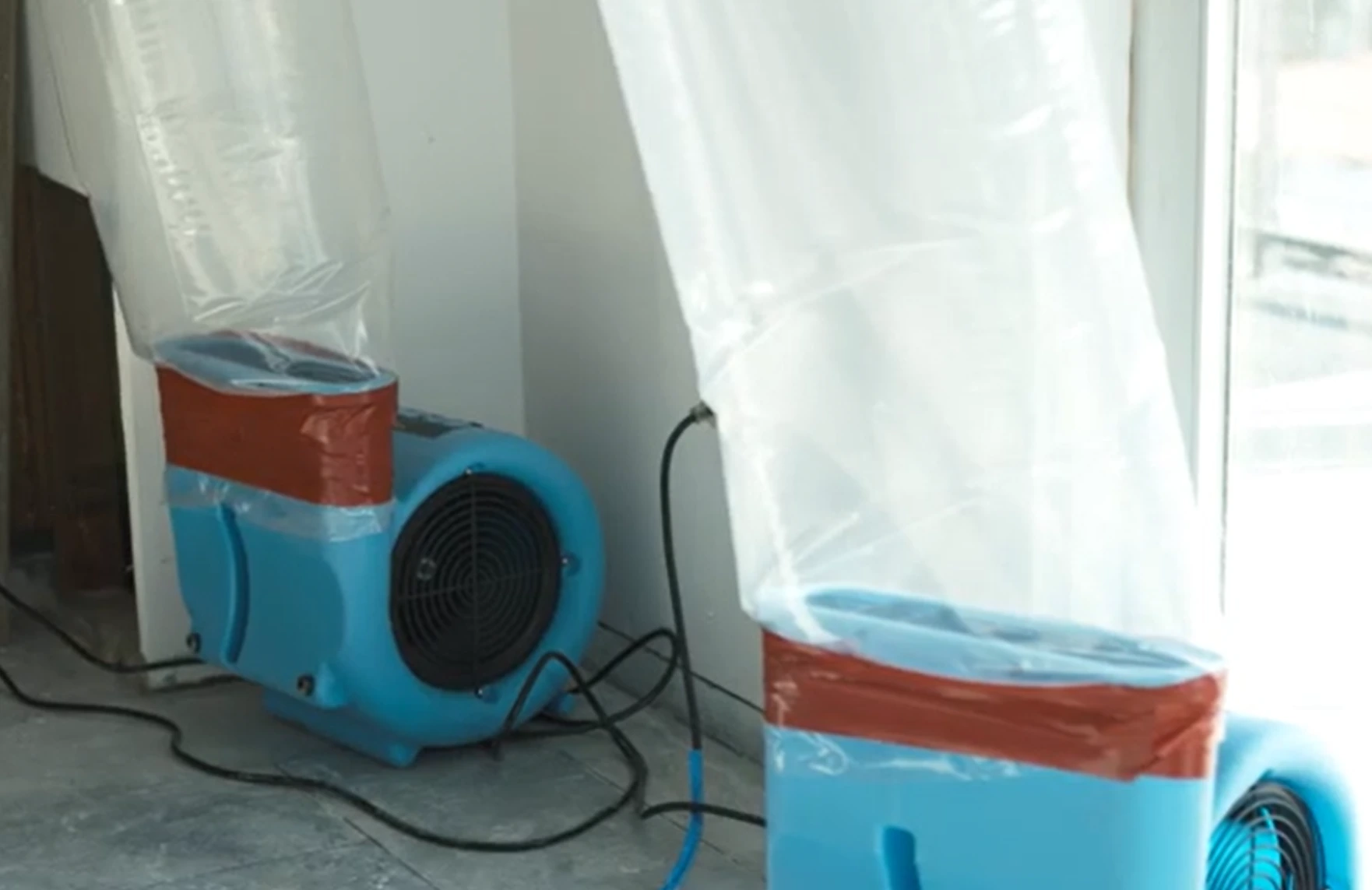
Air movers and containment covered in our water damage FAQ for Fort Myers

Water where it shouldn’t be? Let’s get it dry.

Fast help starts with one call. Every hour counts in this humidity, so don’t wait for the smell.

Call (239) 837-2323 any time. Our line is answered 24/7. See the contact page for email and office details.