
Water Damage, What Do I Do Next? What to Do After Water Damage in Fort Myers
What to do after water damage, hour by hour: stop the water, stay safe, photograph everything, report the claim and start drying before mold gets a head start.
100+ ReviewS
24/7 Phone Line
IICRC S500 & S520 Methods
Licensed Mold Remediators
The short version, in one paragraph
Stop the water, make the room safe, photograph everything before you move it, report the claim and get drying started the same day. The EPA says wet materials should be dry within 24 to 48 hours to prevent most mold growth, so the first day decides whether this stays a drying job.
We get the “water damage, what do I do next?” call at every hour of the day in Fort Myers, and the answer is the same whether it is a burst supply line in Gateway or an AC overflow in Whiskey Creek. Work through the list below in order. Most of it takes ten minutes and protects both the house and the claim.
The first hour: stop, secure, document
Six things, in this order. Do not skip the photos.
- Shut off the water. In most Lee County homes the main shut-off valve is outside where the line enters the house, or in a ground box by the meter near the street. Toilets, sinks and water heaters have their own small valves if you can see where the leak is.
- If the AC is the source, turn it off at the thermostat. A clogged condensate line keeps overflowing as long as the air handler runs. Turn it back on as soon as the drain is cleared.
- Cut power to wet rooms from a dry spot. Never touch switches, outlets or the breaker panel while standing in water. If you cannot reach the panel safely, leave it.
- Stay out of dirty water. Water from a toilet, a sewer line or outside flooding is Category 3. Do not wade through it without boots and gloves, and keep children and pets out.
- Photograph and video every wet room before you move furniture or lift a rug. Keep the failed part, like the split supply line or the rusted water heater fitting. Your adjuster will ask what failed.
- Move what you can to a dry area. Lift furniture onto blocks or foil, pull rugs off wet floors and get electronics and documents up high.
Hours 2 to 24: report, extract, start drying
Report the loss the same day, get standing water out and get air moving. Waiting for the adjuster to visit before drying starts is the most expensive mistake we see.
- Report the claim. Call your insurer or agent, give the date and time you found the water and what failed. Florida gives you one year to report a new claim (F.S. 627.70132), but the same-day call shows you acted quickly. Your policy also requires you to prevent further damage, so drying now is expected, not penalized.
- Call for extraction. Standing water should be out on day one. Our water removal crews use truck-mounted and portable extractors and can start the same day, 24/7.
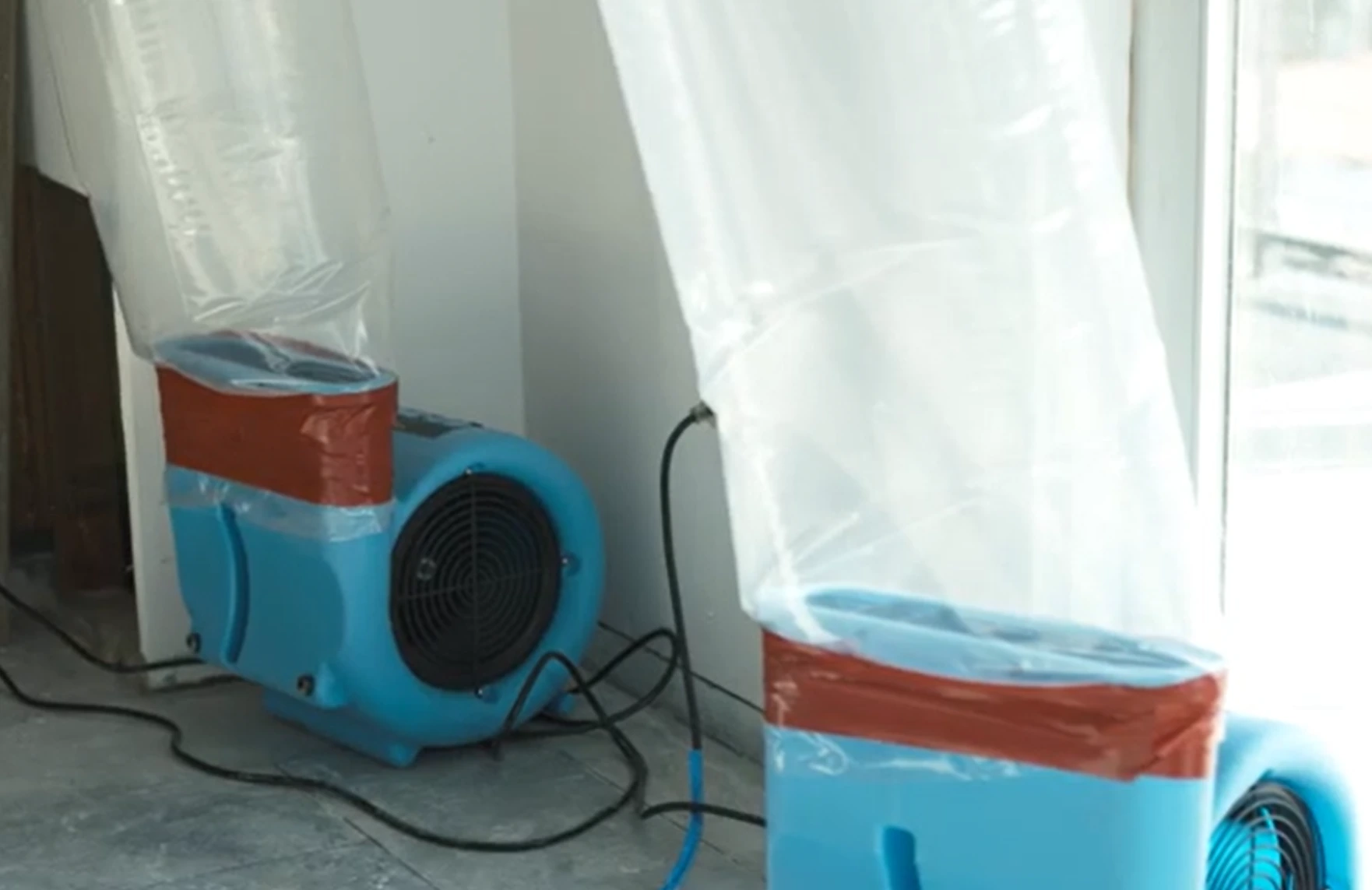
- Get air moving and humidity down. Run the AC if it is not the leak. Open cabinet doors under wet sinks. Box fans help on the surface but will not dry inside walls.
- Do not throw anything out yet. Wet drywall, carpet and cabinets are evidence. They get photographed and listed before they are removed.
- Write everything down. Dates, times, who you spoke to, claim number. Keep receipts for anything you buy.
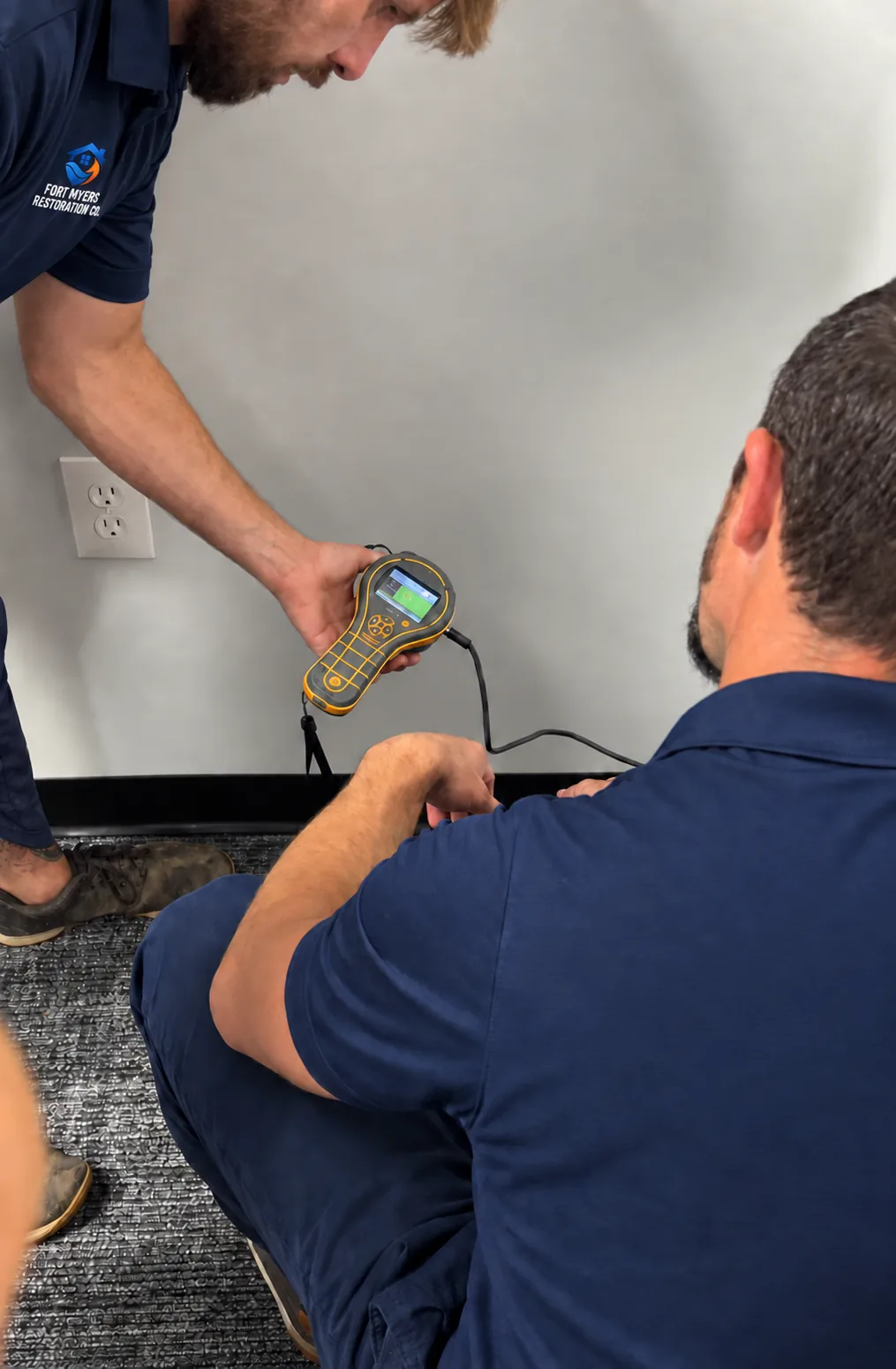
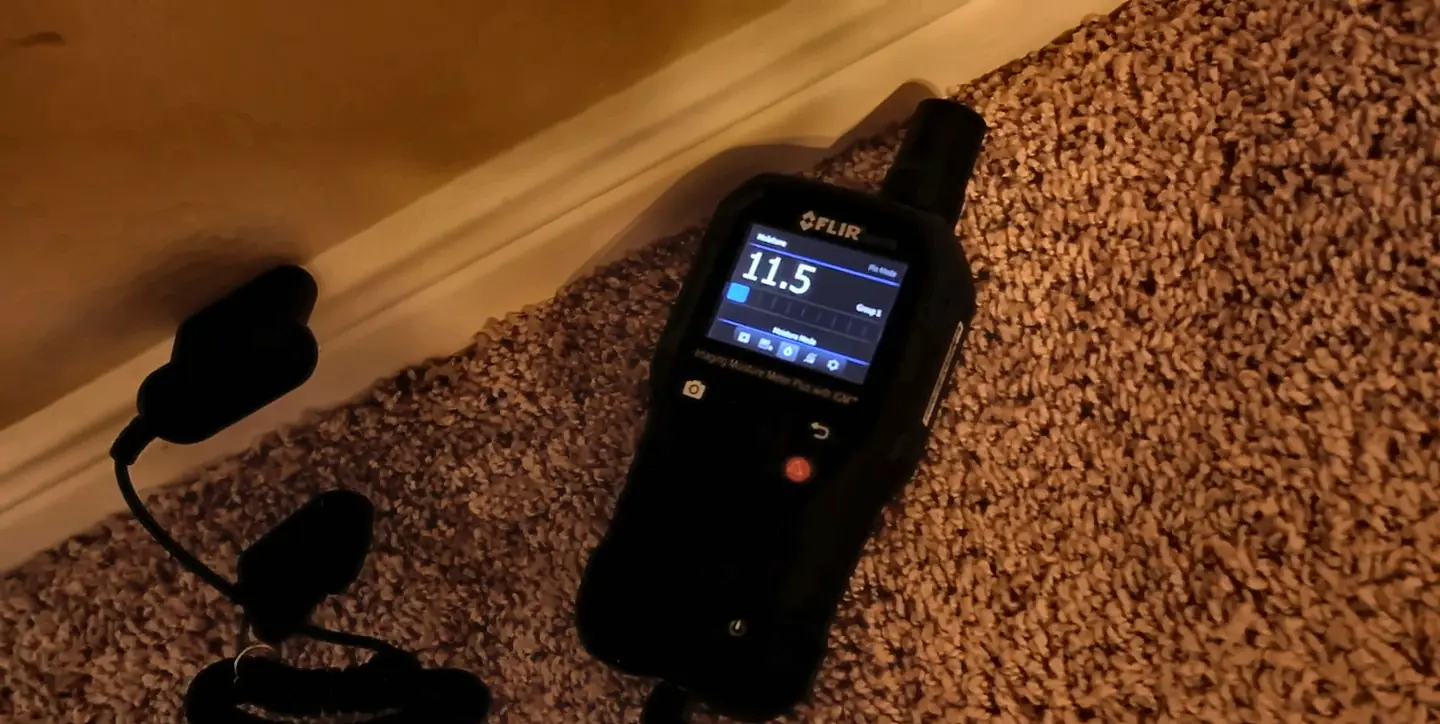
- Expect the inspection. The technician maps every wet wall and floor with moisture meters and a thermal camera and gives you a written scope before any tear-out.
Our Florida water damage insurance claims guide covers what the adjuster will ask for and the deadlines your insurer has to meet.
Doing it yourself: what you can handle and what you should not
A small clean-water spill on tile is a mop job. Anything that soaked drywall, carpet pad or cabinets, or came from sewage or outside, is not.
| Do it yourself | Call a crew |
|---|---|
| A clean-water spill under a few square feet on tile or vinyl, caught the same day | Water that reached drywall, baseboards, carpet pad, cabinets or wood flooring |
| Mopping, towels, running the AC and a household dehumidifier | Any leak that ran overnight or longer, or a ceiling that is wet from above |
| A wet-vac on surface water from a clean source | Toilet, sewer, septic or flood water of any amount |
| Mold on a hard surface under about 10 square feet (EPA guidance) | Mold larger than 10 square feet, which needs a Florida DBPR-licensed remediator by law |
The reason is not that you cannot use a fan. It is that you cannot see how far the water went. Water travels under tile, up block walls and into insulation, and a surface that feels dry can read wet on a meter for weeks. Unseen moisture is how a $1,500 drying job becomes a mold remediation with cabinets out.
What this means in Fort Myers
Our humidity shortens every window on this page, so what to do after water damage here has to happen faster. Water that would take three days to cause trouble up north can grow mold here in two.
Fort Myers averaged 72% relative humidity in 2024, and summer 2024 was the wettest on record here (National Weather Service, WINK News). Most homes sit on a concrete slab with tile floors and block walls, so water hides under the tile and inside the block and comes back slowly. That is why our first visit is about moisture mapping, not just pulling up standing water. The full sequence, with timelines for each step, is on the water damage restoration process page, and the home page has the six first-hour steps in a form you can show a house watcher.
Key facts: the first 24 hours
The rules behind this checklist on what to do after water damage, with their sources.
- Wet materials should be dried within 24 to 48 hours to prevent most mold growth (EPA).
- A new water damage claim must be reported within 1 year of the date of loss; supplemental claims within 18 months (F.S. 627.70132).
- Florida policies require you to protect the property from further damage, so starting extraction and drying before the adjuster visits is expected.
- Toilet, sewer and outside flood water is Category 3 and should not be handled without protective gear (ANSI/IICRC S500, EPA).
- Mold over 10 square feet must be removed by a Florida DBPR-licensed mold remediator (F.S. 468.8411).
- Fort Myers averaged 72% relative humidity in 2024 (National Weather Service).
- Help: 24/7 water removal and drying in Fort Myers and Lee County. Phone (239) 837-2323.
Last updated September 29, 2026. Reviewed by the Fort Myers Restoration Co. team against the sources named on this page.
Water damage, what do I do next? Your first 24 hours questions
The questions we hear most on the first call, starting with “water damage, what do I do next?”
Call (239) 837-2323, day or night.
Water where it shouldn’t be? Let’s get it dry.
Still unsure what to do after water damage? One call gets extraction started today, with the photos and readings your claim will need.
Call (239) 837-2323 any time. Our line is answered 24/7. See the contact page for email and office details.