
Property Storm Damage Restoration Service Fort Myers FL and Storm Damage Repair Fort Myers
Storm damage restoration in Fort Myers, 24/7: wind-driven rain, roof leaks, storm surge and flooded first floors dried and documented by our licensed local crews.
100+ ReviewS
24/7 Phone Line
IICRC S500 & S520 Methods
Licensed Mold Remediators
What we do after the wind stops
After a storm, the work means three jobs at once: stop new water getting in, remove what the storm ruined, and dry and document the structure for a hurricane claim. Our crews do all three, day or night. Hurricane Ian pushed 7.26 feet of surge past the downtown Fort Myers gauge in 2022 and damaged at least 52,514 structures in Lee County, according to the National Hurricane Center report on Ian. Milton and Helene in 2024 each put more than 5 feet of water on the same gauge. Every one of those storms left the same mix behind: soaked drywall, wet insulation, buckled floors and homes with the power out for days.
- Emergency board-up and roof tarping so no more water gets in
- Water extraction from surge, wind-driven rain and roof leaks
- Flood cuts, removal of wet insulation, carpet and cabinets that cannot be saved
- Sanitizing after surge or sewage, then structural drying with daily logs
- Photos, moisture maps and an itemized scope for your windstorm or flood claim
- Rebuild with a Lee County or City of Fort Myers permit where the work needs one
Storm questions answered in short
What owners ask first about property storm damage restoration Fort Myers FL jobs.
Is storm damage covered by homeowners insurance?
Wind and rain that gets in through storm damage is usually covered, with the hurricane deductible for a named storm. Surge and rising water need flood insurance.
How long do I have to file a hurricane claim in Florida?
One year from the date of loss for a new claim and 18 months for a supplemental claim, under Florida Statute 627.70132.
Can I start cleanup before the adjuster visits?
Yes. Your policy expects you to stop further damage. Photograph everything first, keep removed materials or photos of them, and save every receipt.
Wind, rain or surge? Why the source decides your storm damage repair
Rain through a damaged roof, surge from the Caloosahatchee and a backed-up sewer are three different jobs and three different insurance claims. The first thing our crew does is work out which one you have.
| Where the water came from | How it is handled | Which policy usually pays |
|---|---|---|
| Wind-driven rain through a roof, soffit or window | Inspected first. The IICRC says weather-related water is not automatically Category 3. Often dried in place | Homeowners policy, with the hurricane deductible |
| Storm surge or river flooding | Category 3. Porous materials removed, surfaces sanitized, then dried | Flood policy (NFIP or private) |
| Sewer or septic backup during the storm | Category 3. Removal and sanitizing before drying | Homeowners policy with a water backup endorsement |
| Power out, AC off for days | Humidity damage and mold in a closed house | Depends on the cause of the outage and the policy |
After a hurricane many homes have both wind and flood damage. Photos that show where the water came in, a ceiling stain under a torn roof versus a water line on the walls, help each insurer see its share.
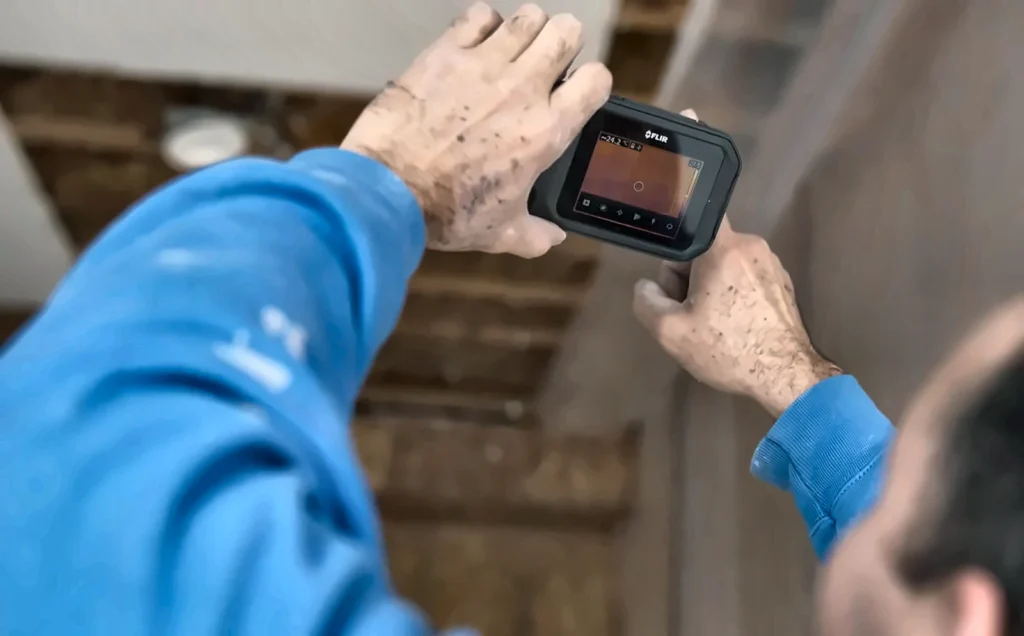
The first 48 hours after a storm
Wait for the all-clear, make the house safe, photograph everything, then start drying. The EPA window for drying wet materials before mold starts is 24 to 48 hours, and it does not pause for a power outage.
- Wait for Lee County Emergency Management to clear your area before going back in. The county storm hub is leegov.com/storm, and the citizen information line after a storm is 2-1-1.
- Do not turn the power back on yourself if water reached outlets or the panel. Have an electrician check it first.
- Photograph the water line on every wall and every damaged item before anything goes to the curb.
- Tarp the roof and board broken windows the same day. New rain on wet drywall restarts the clock.
- Call your insurer for a claim number, then call (239) 837-2323. Storm damage repair in Fort Myers books up fast after a named storm, so the earlier you call, the sooner drying starts.
- Run a generator outside only, never in a garage or carport.
How storm surge damaged Fort Myers homes in Ian, Helene and Milton
Ian in 2022 was the worst: 10 to 15 feet of inundation on Fort Myers Beach, 9 to 13 feet on Sanibel and 5 to 8 feet up the Caloosahatchee in Fort Myers. Helene and Milton in 2024 each topped 5 feet at the downtown gauge.
| Storm | Fort Myers downtown gauge | What it meant for homes |
|---|---|---|
| Hurricane Ian, September 2022 | 7.26 feet above normal high tide | Ground floors along the river and McGregor corridor flooded; 5,369 Lee County structures destroyed |
| Hurricane Helene, September 2024 | 5.12 feet above normal high tide | Surge into low riverfront streets, garages and first floors |
| Hurricane Milton, October 2024 | 5.27 feet above normal high tide | Surge plus wind-driven rain and long power outages |
Figures are from the National Hurricane Center reports on Ian, Helene and Milton. The lesson from all three is the same: the homes that dried fastest had the smallest claims.
Disaster response in Fort Myers: our 6-step storm restoration process
Storm damage restoration in Fort Myers follows one order: safety first, then stop the water, remove, sanitize, dry and document. The order does not change, even when the whole street is wet.
1. Phone triage
Is the area cleared, is power off, how high did water get and how long did it sit. Then our nearest available crew is on the way.
2. Emergency dry-in
Roof tarps and board-up stop new water. Wet contents are moved or wrapped.
3. Storm damage clean up Fort Myers FL: extraction and removal
Standing water comes out. Surge-soaked drywall, insulation, carpet and particleboard cabinets are removed and photographed.
4. Sanitizing
Framing, slab and hard surfaces are cleaned and treated after any surge or sewage water.
5. Structural drying
LGR dehumidifiers and air movers run until readings hit the dry standard. A thick slab holds water well past the surface, so readings are logged daily.
6. Records and rebuild
You get the photos, moisture logs and an itemized scope. Rebuild starts after everything reads dry, with a permit where required.
Hurricane deductibles, AOB and permits after a Fort Myers storm
Your hurricane deductible is a percentage of the dwelling limit, it applies once per calendar year, and no contractor can take over your claim.
- Florida Statute 627.701 requires insurers to offer hurricane deductible choices of $500 or 2, 5 or 10 percent of the dwelling limit. It applies once per calendar year to all hurricane losses under policies from the same insurer.
- Notice of a new claim is due within 1 year of the loss under F.S. 627.70132. Report it as soon as you can.
- Assigning your post-loss benefits to a contractor is void on policies issued on or after January 1, 2023 (F.S. 627.7152). We never ask for one.
- Lee County requires permits for repairs related to storms and floods, and any repair in a Special Flood Hazard Area. In a flood zone, the 50 percent rule decides whether the home must be brought up to current floodplain code.
- After every named storm, out-of-area crews go door to door. Check any license on the Florida DBPR license search before you sign. Our standards and licensing guide shows how.
For the full claim walkthrough see the Florida water damage insurance claims guide. For rising water, see flood damage restoration in Fort Myers.
Where storm damage hits hardest across Fort Myers
Storm damage restoration in Fort Myers depends on where you live: surge along the river and the coast, wind and roof damage inland, and rain flooding on flat lots to the east.
| Area | Main storm risk | What usually needs restoring |
|---|---|---|
| Downtown River District and McGregor | Caloosahatchee surge | Ground floors, garages, older plaster and cast iron drains |
| Iona, Punta Rassa and Fort Myers Beach | Gulf and bay surge | Whole first floors, elevated-home garages, the 50 percent rule |
| Gateway, Daniels Parkway and San Carlos Park | Wind-driven rain, roof leaks, ponding | Ceilings, insulation, garages |
| North Fort Myers and manufactured home parks | Wind and roof loss | Ceilings, subfloors, belly wrap |
| Lehigh Acres | Heavy-rain and canal flooding | Garages, low rooms, septic backups |
Our crews cover Fort Myers, Cape Coral, Lehigh Acres, Estero, Bonita Springs, North Fort Myers, Fort Myers Beach, Sanibel and Naples. Updated September 2026. Storm figures come from the National Hurricane Center reports on Hurricane Ian, Helene and Milton, the IICRC, the EPA, Lee County and the Florida Statutes.
Storm Damage Repair Fort Myers: What We Fix Once the Water Is Out
Storm damage repair Fort Myers homes need starts only once the structure is dry. Storm damage repair in Fort Myers is rarely one trade. It is roof tarping, water extraction, drying, mold prevention and then the rebuild, in that order.
After every storm we get the same call: the roof is patched, but the ceiling is still wet and the house smells damp. That is because the tarp stops new water, it does not remove the water that already soaked the attic insulation, the drywall and the subfloor. Good storm cleanup starts with extraction and moisture mapping, not with paint.
The order we work in
- Make the property safe: shut off power to wet circuits, check for structural sag, board up broken windows and tarp roof openings.
- Remove standing water and wet debris. Vegetation, broken fence panels and soaked contents go out first so the crew can reach the walls.
- Pull wet insulation, saturated carpet pad and any drywall that has been wet for more than a day. In Fort Myers humidity, that material will not dry in place.
- Set air movers and dehumidifiers and log moisture readings daily until framing reaches its dry standard.
- Apply an antimicrobial to framing and subfloor before anything is closed up.
- Rebuild: drywall, texture, paint, trim, flooring and cabinets. We photograph each stage for your adjuster.
You keep one point of contact for the whole job, so you are not coordinating a roofer, a drying company and a drywall crew on your own while you deal with an insurance claim. If you prefer your own roofer, that is fine. We coordinate with them and keep the interior work moving.
Wind damage, surge damage and rain intrusion are handled differently
Wind damage usually means the roof, soffits and windows let rain in. That is clean rainwater, and fast drying saves most of the drywall. Storm surge is a different job: salt water, silt and sewage contamination mean flooring and lower drywall come out regardless of how quickly anyone arrives. Our flood damage restoration page covers the surge process in detail. Rain intrusion through a failed window seal or a clogged gutter is the quiet one. It often shows up as a stained ceiling weeks after the storm, and by then mold is usually present.
| Storm damage type | Typical source | What usually has to be removed |
|---|---|---|
| Wind and roof damage | Lifted shingles, torn underlayment, blown soffits | Wet attic insulation, stained ceiling drywall |
| Storm surge | Caloosahatchee and Gulf water pushed inland | Flooring, lower 2 feet of drywall, base cabinets |
| Rain intrusion | Window seals, sliders, stucco cracks | Window sill drywall, sometimes flooring near sliders |
| Power loss | Sump and AC condensate pumps stopped | Wet closet and garage contents, sometimes carpet |
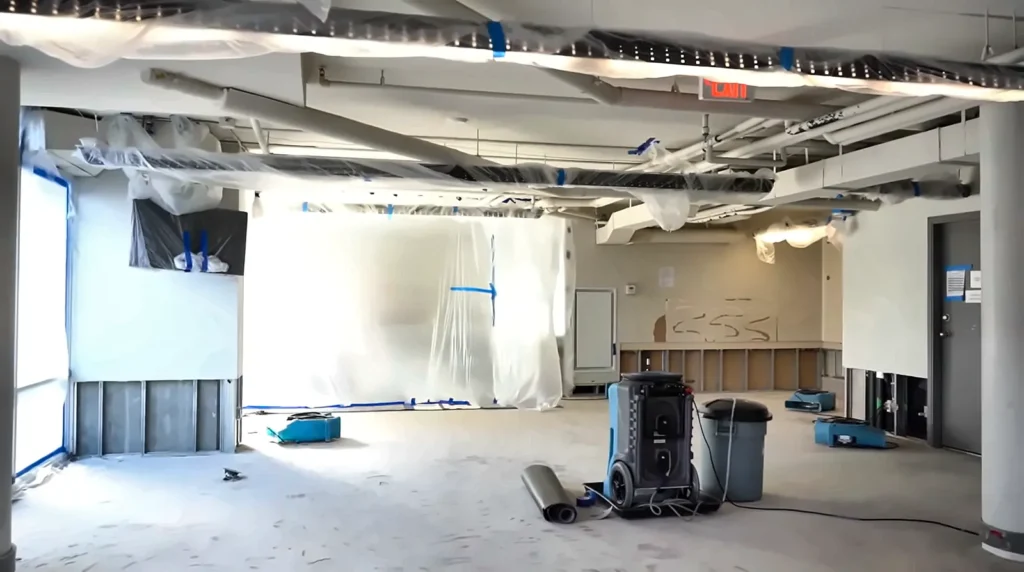
Ceiling and roof leak water damage after a storm
A stained ceiling after a storm is a wet attic until proven otherwise. We check the insulation and the top of the drywall with a meter before deciding whether the ceiling can be saved.
Ceiling and roof leak water damage is the most common storm call we get in the week after a named storm. The pattern is predictable. A few shingles lift, rain gets under the underlayment, and water runs along the trusses until it finds a low point. The stain you see on the ceiling is usually several feet from where the roof actually leaked.
- A yellow or brown ring that stays dry to the touch is often an old leak. We still meter it, because the insulation above may be wet.
- A sagging or bubbling section means the drywall is holding water. Do not poke it from below without a bucket and a drop cloth ready.
- Wet blown-in insulation loses its R-value and holds moisture against the drywall. In most cases it has to come out and be replaced.
- If the leak ran down an interior wall, we open the base of that wall too. Water inside a wall cavity does not dry on its own in a Fort Myers summer.
Our crews carry tarps, moisture meters and a thermal camera on every storm call, so we can trace the water path in the attic instead of guessing from the stain. If the roof is still open, tarping comes first. Then we dry the attic and the ceiling from above and below. For the wider drying method, see our water damage restoration process. If you are filing a claim, photograph the roof, the attic and the ceiling before anything is removed, and read our Florida water damage insurance claims guide for the notice deadlines.
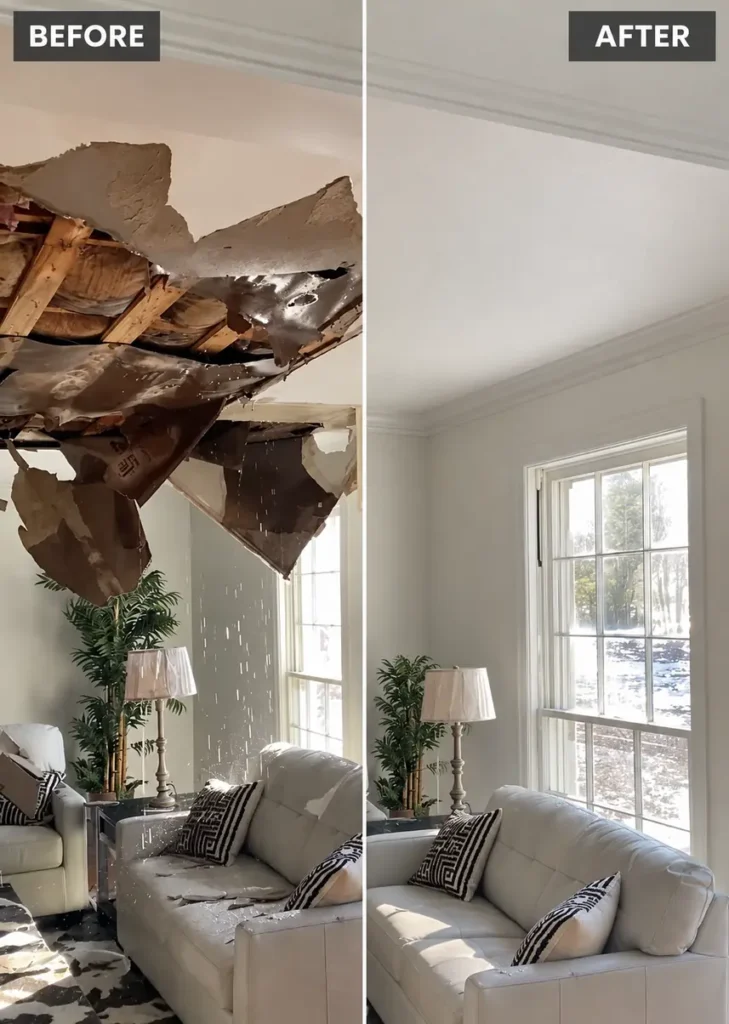
Who we help after a storm
Three groups call us most after a hurricane.
Homeowners
Roof, window and lanai leaks, dried and documented for the claim.
Owners Away During the Storm
Photo updates and a key handoff while you are out of state.
Condo Owners and Boards
Leaks that cross units, with records for each insurer.
Before the next storm
A short list that makes the claim and the cleanup faster.
- Photograph every room and your belongings before hurricane season starts on June 1.
- Know your hurricane deductible. Florida policies use $500 or 2, 5 or 10 percent of the dwelling coverage.
- Clear gutters and the AC drain line so heavy rain has somewhere to go.
- Shut off the main water valve if you evacuate or leave for the season.
- Move valuables and papers off the floor when a storm is forecast.
Local crew, storm chaser or do it yourself?
Out-of-area crews arrive after every named storm. Here is how to tell the difference.
| What matters | ★ Best choiceFort Myers Restoration Co. | Out-of-area storm chaser | Do it yourself |
|---|---|---|---|
| Local office | Techster Blvd, Fort Myers | Leaves after the storm | N/A |
| No assignment of benefits | Never asked | Often asked to sign | N/A |
| Written scope before work | Always | Varies | No |
| Wind, rain and surge sorted | Separate notes and photos | Rarely | No |
| Commercial drying | Air movers and dehumidifiers | Varies | Box fans |
| Best for | Any storm leak or surge damage | Not recommended | Small clean leaks caught fast |
Storm chaser and do it yourself columns describe typical options, not a specific company.
Key facts about storm damage restoration in Fort Myers
- Hurricane Ian made landfall in Lee County on September 28, 2022, and most of the storm damage work we still see today traces back to that surge and wind.
- Atlantic hurricane season runs June 1 to November 30. Our Fort Myers storm crews stay staffed through the whole window.
- Storm surge water is treated as Category 3 (contaminated) water. Porous materials it touched are removed, not dried.
- Florida law requires notice of a new hurricane claim within one year of the date of loss under F.S. 627.70132.
- We handle storm cleanup, water removal and mold remediation as one job, with one crew lead and one set of moisture logs.
Last updated September 29, 2026. Reviewed by our Fort Myers crew lead.
Where we work across Lee and Collier County
Property storm damage restoration Fort Myers crews also cover homes across Lee and Collier County.
Storm damage restoration questions
Short, straight answers about storm damage restoration in Fort Myers.
Call (239) 837-2323, day or night.
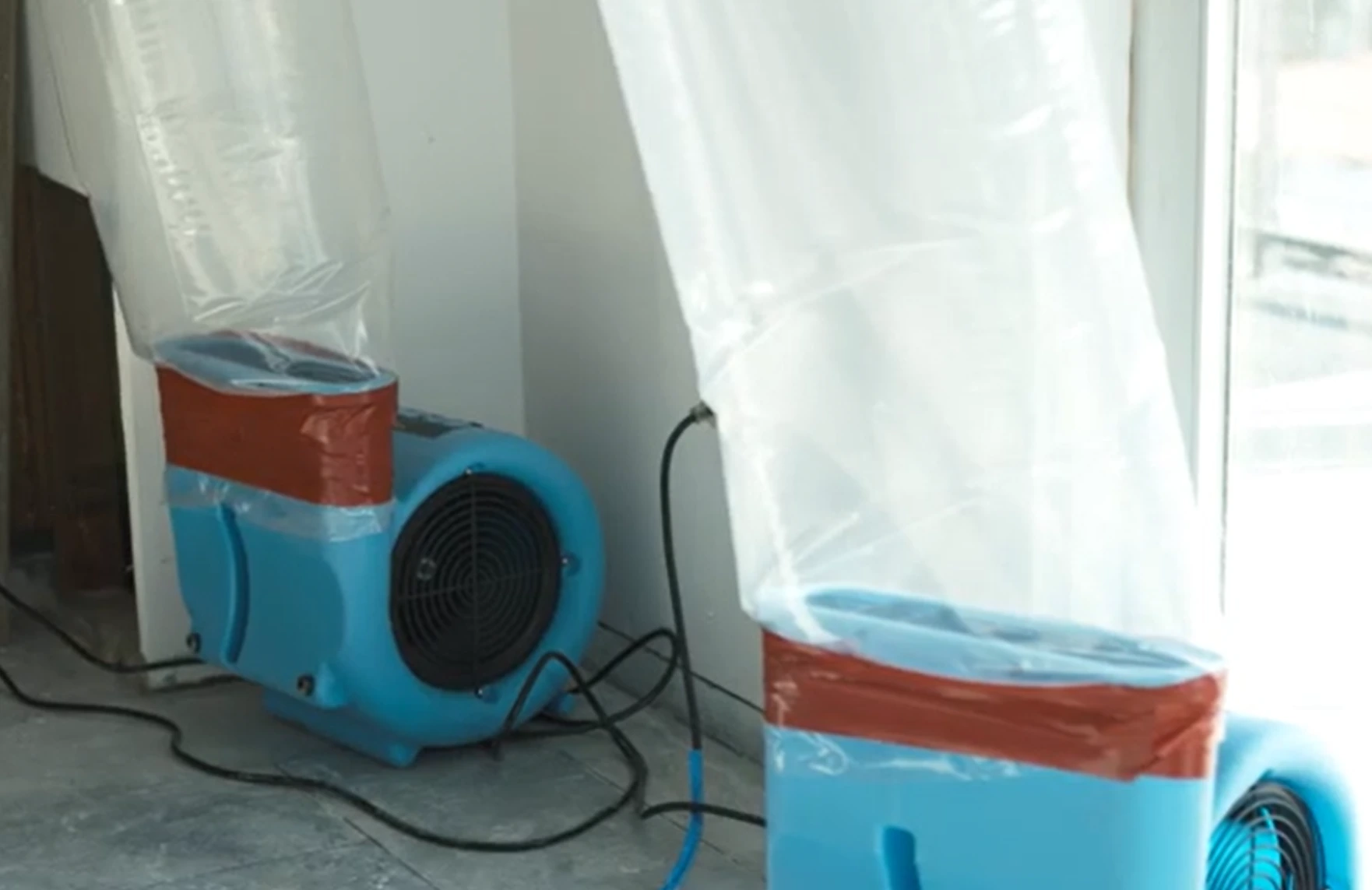
Storm Damage in Fort Myers? Call Us 24/7
Fast storm damage restoration in Fort Myers starts with one call. Every hour counts in this humidity, so don’t wait for the smell.
Call (239) 837-2323 any time. Our line is answered 24/7. See the contact page for email and office details.