
Cat 3 Water Damage, Category 3 Water and Drying Classes Explained
Category 1, 2 and 3 water and Classes 1 to 4, in plain English: what each one means for safety, what gets thrown out, how long drying takes and what it costs in a Fort Myers home.
100+ ReviewS
24/7 Phone Line
IICRC S500 & S520 Methods
Licensed Mold Remediators
What cat 3 water damage and the other categories mean
The category tells you how contaminated the water is. Category 1 is clean, Category 2 is gray, and Category 3 is black water: sewage, storm surge and anything that has been sitting long enough to grow bacteria. The class tells you how much of the room got wet and how hard it will be to dry.
Both come from the ANSI/IICRC S500 standard. We use the category and the class on every job in Fort Myers, because together they decide what can be dried in place, what has to be removed and how long equipment runs. Your adjuster uses the same terms.
- Category 1: clean water from a supply line, a water heater or rain through a roof. Most materials can be dried in place if you move fast.
- Category 2: gray water from a washing machine, dishwasher or a clean leak that sat more than about 48 hours. Carpet pad usually comes out.
- Category 3: black water from sewage, toilets, storm surge, canals and rivers. Porous materials it touched are removed, not dried.
- Classes 1 to 4 describe how much water the materials absorbed, from a small wet spot to soaked hardwood and concrete.
From clean to Category 3 water: how dirty the water is
The category is set by where the water came from and how long it has been there, and Category 3 water is the most contaminated. Time and heat push water up a category, which is why a Fort Myers leak found on Friday is often treated differently on Monday.
| Category | Where it comes from in Lee County | What happens to wet materials |
|---|---|---|
| Category 1 (clean) | Burst supply lines, water heaters, AC condensate, rain through a roof or window | Drywall, cabinets and most flooring can usually be dried in place with air movers and dehumidifiers |
| Category 2 (gray) | Washer and dishwasher overflows, aquarium leaks, a Category 1 leak that sat 48 hours or more | Carpet pad and wet insulation come out. Hard surfaces are cleaned and dried. Antimicrobial treatment is standard |
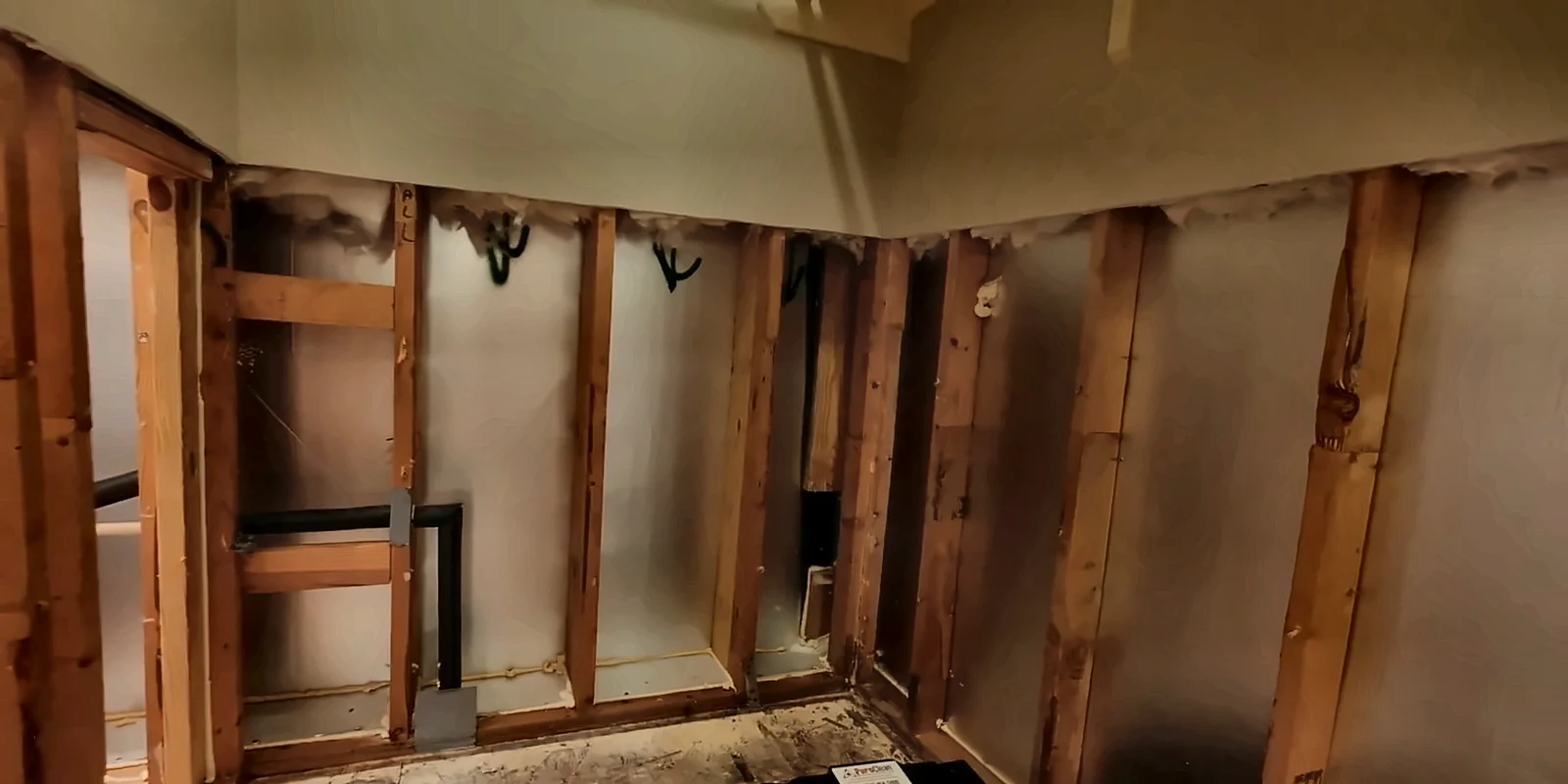
| Category 3 (black) | Toilet and sewer backups, septic failures, storm surge, river and canal flooding | Drywall, insulation, carpet, pad and particleboard that touched the water are removed and the area is sanitized before drying |
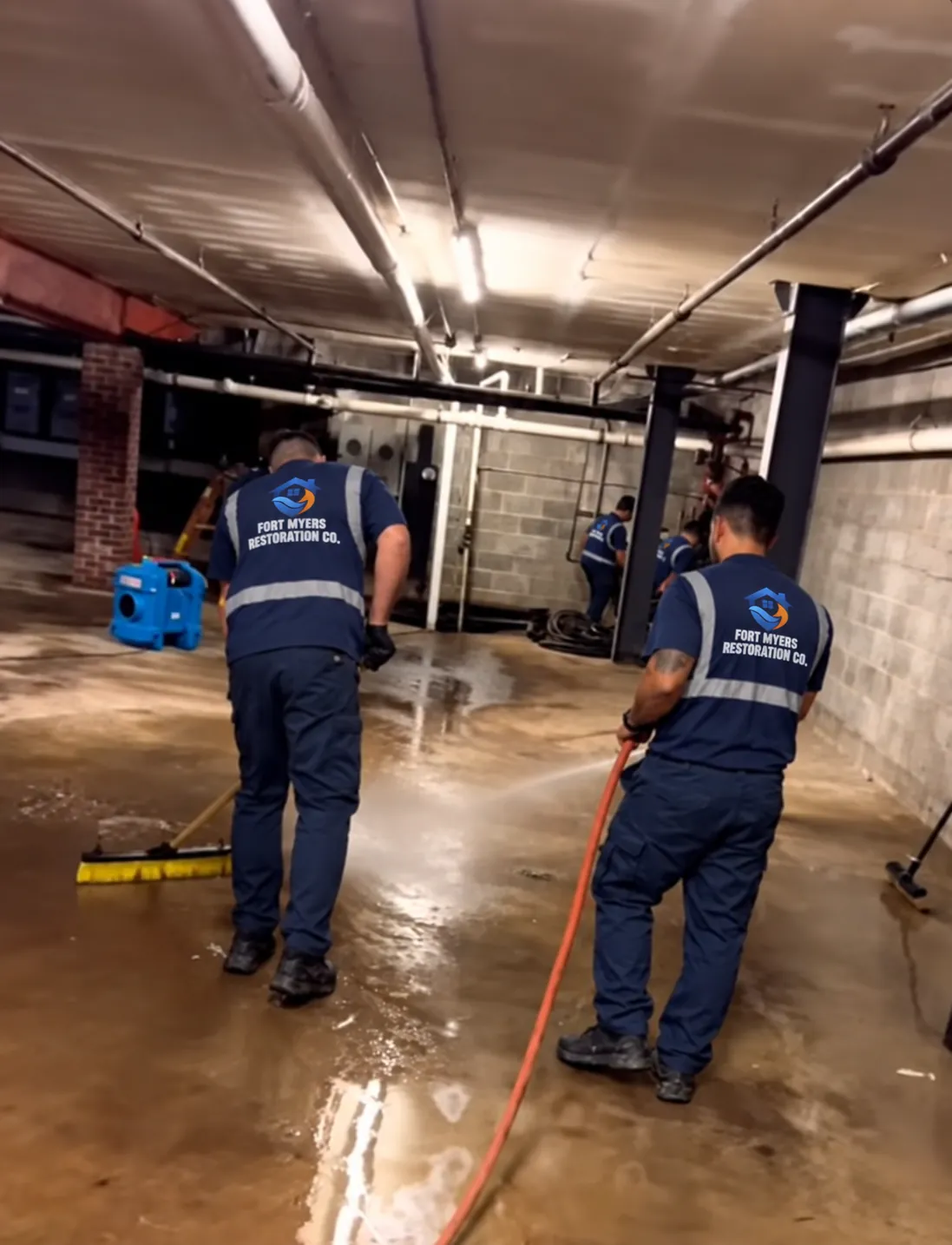
Category 3 water is the one people underestimate. Storm surge looks like rain water, but it has been through streets, yards and drain fields, so we treat all flood water from outside the house as black water, the same as a sewage backup. During Hurricane Ian the downtown Fort Myers gauge recorded 7.26 feet of surge (National Hurricane Center), and every home that water reached was a Category 3 job. Our flood damage restoration page explains what that looks like room by room.
Cleanup of black water also changes safety. The crew works in protective gear, the area is contained, and children and pets stay out until the clearance check.
Water damage classes 1 to 4: how much got wet
The class describes the evaporation load: how much water the building materials soaked up and how fast it will come back out. Higher class means more equipment and more days.
| Class | What it looks like | Typical drying |
|---|---|---|
| Class 1 | A small area, little absorption. A leak caught within hours on tile | 1 to 3 days with a few air movers |
| Class 2 | A whole room, carpet and pad wet, water up the drywall under 2 feet | 3 to 5 days |
| Class 3 | Water came from above. Ceilings, walls, insulation and floors are all wet | 5 days or more, often with tear-out |
| Class 4 | Specialty drying. Water bound inside hardwood, plaster, concrete slab or block walls | A week or more with targeted equipment such as floor mats and desiccant drying |
Most Fort Myers homes are built on a concrete slab with block exterior walls and tile floors. That combination hides water well and gives it back slowly, so a leak that looks like Class 2 on the surface often turns into Class 4 under the tile. This is why the technician maps moisture with meters and a thermal camera before deciding what to set. Guessing the class is how equipment gets pulled too early and mold shows up a month later.
What the category and class mean for your job and your claim
Together they decide four things: whether it is safe to stay, what gets removed, how many days equipment runs and which cost tier you are in.
- Safety. Category 1 and 2 jobs can usually be lived around. Category 3 jobs in the kitchen or bedrooms are a reason to stay elsewhere for a few days.
- Removal. Clean water is dried in place where readings allow. Black water means flood cuts and disposal, which is why a surge job costs more than a supply line job of the same size.
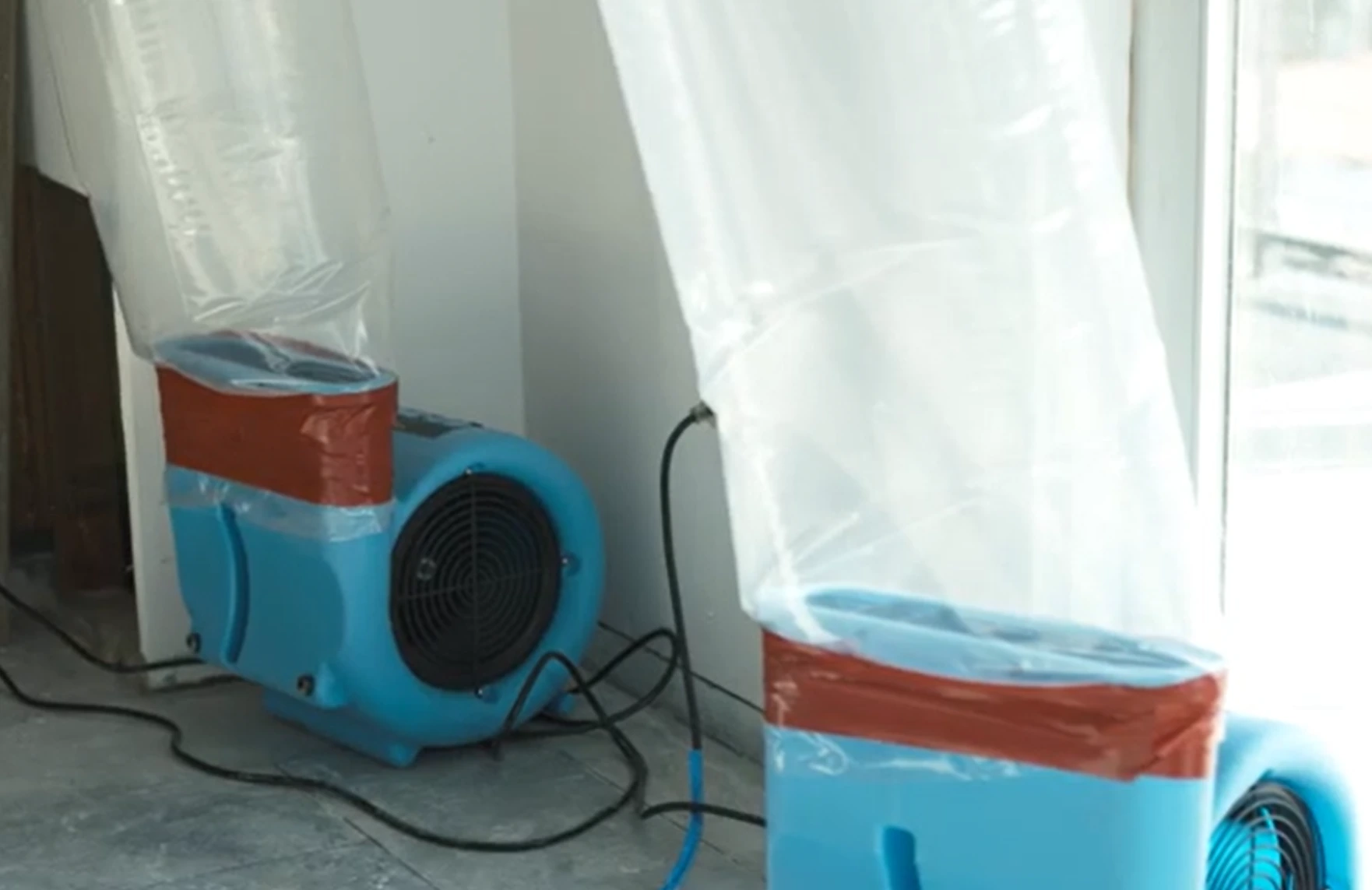
- Time. Class 1 dries in days. Class 4 concrete and hardwood can take a week or more. Daily moisture readings decide when the equipment leaves, not the calendar.
- Insurance. Adjusters price by category and class. Sudden clean-water losses are usually covered by a homeowners policy. Surge and river water need a separate flood policy, and sewer backups often need an endorsement.
Water also moves up a category over time, so starting extraction within the EPA’s 24 to 48 hour window keeps the category down and the bill with it.
What this means in Fort Myers
Our climate pushes jobs up the scale, toward cat 3 water damage. Heat and humidity turn gray water black faster, and slab homes turn Class 2 into Class 4 more often than people expect.
Fort Myers averaged 72% relative humidity in 2024 (National Weather Service). Warm, damp air is exactly what bacteria and mold want, so the 48-hour clock that separates the categories runs fast here. It also means a Category 1 leak in a closed seasonal home is rarely still Category 1 when the owner finds it in November. On the class side, tile over slab, block walls and attic air handlers mean water gets into places a surface reading will not show. The water removal page covers how we extract and dry those materials, and the process page shows the equipment and the daily log.
Key facts: water categories and classes
The definitions behind cat 3 water damage and the other categories, with their sources.
- Categories 1, 2 and 3 and Classes 1 to 4 are defined in ANSI/IICRC S500:2021, the standard for professional water damage restoration.
- Category 3 includes sewage, seawater, and rising water from rivers, streams and storm surge (ANSI/IICRC S500).
- A Category 1 loss can become Category 2 or 3 as time passes and temperature rises (ANSI/IICRC S500).
- Wet materials should be dried within 24 to 48 hours to prevent most mold growth (EPA).
- For flood cleanup the EPA recommends an N-95 respirator, goggles, gloves, long sleeves and boots.
- Hurricane Ian surge reached 7.26 feet at the downtown Fort Myers gauge (National Hurricane Center).
- Help: 24/7 water removal, flood cleanup and licensed mold work in Fort Myers and Lee County. Phone (239) 837-2323.
Last updated September 29, 2026. Reviewed by the Fort Myers Restoration Co. team against the sources named on this page.
Water category and class questions
Short answers on Category 3 water, black water and drying classes.
Call (239) 837-2323, day or night.
Water where it shouldn’t be? Let’s get it dry.
Not sure if it is cat 3 water damage? A technician can tell you on the first visit, with moisture readings to back it up.
Call (239) 837-2323 any time. Our line is answered 24/7. See the contact page for email and office details.